
GTA: San Andreas - Definitive
Rockstar GamesAction
4.1227.00 Reviews
- Version
- 1.87.0
- Installs
- 50.00K
- Age Rating
- Mature 17+
Screenshots

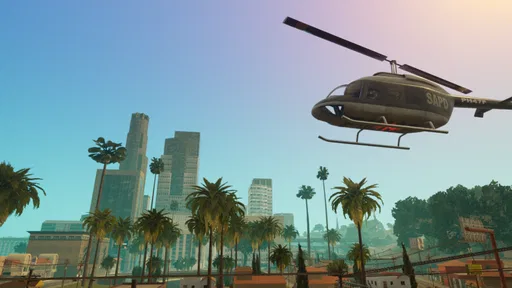
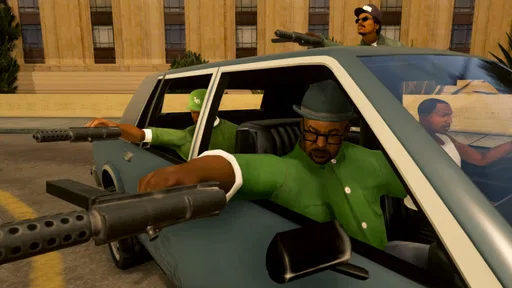
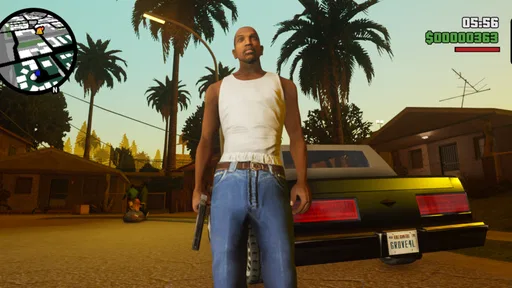
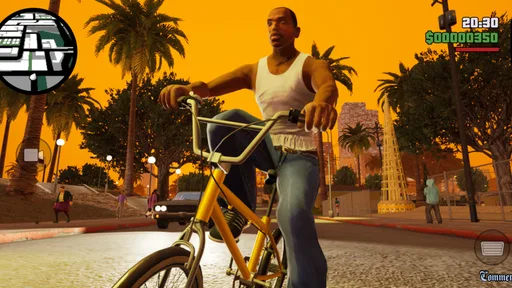

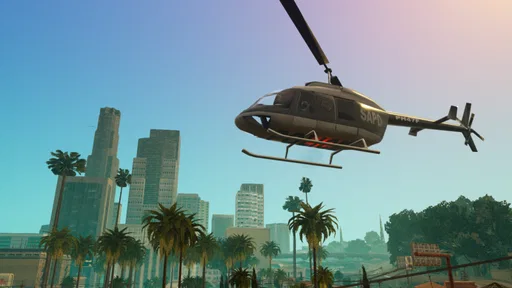
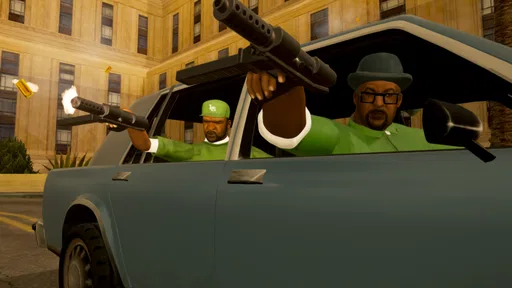
Our Review of GTA: San Andreas - Definitive
 Analysis by Appyee
Returning to Los Santos through GTA: San Andreas - Definitive feels less like opening a quick mobile game and more like carrying a large crime drama in your pocket. I spent time with it as an action game, moving between story missions, open-world distractions, driving, shooting, and the simple pleasure of deciding what to do next. The appeal is still the freedom: I can follow the main plot, explore the city, or ignore the urgent-looking objective for a while and create my own trouble.
That freedom is also the reason this is not an ideal choice for every phone gamer. This is a mature, full-priced experience from Rockstar Games, not a lightweight session game designed around a few spare minutes. It asks for storage, attention, and patience, and its older design occasionally shows through. When it works, though, it offers a much deeper sense of place and progression than most action games built specifically for mobile.
How the early hours establish a reason to keep playing
The opening does a good job of giving me immediate direction without making the world feel small. Carl “CJ” Johnson returns to Los Santos under difficult circumstances, and the early missions introduce the people, neighborhoods, rivalries, and personal stakes that drive the campaign. I always have a clear reason to move forward, but the game does not force me to treat every moment as a straight line from one objective to the next.
That balance matters on a touchscreen. A mission can give me a focused task, while the surrounding city offers a break when I need one. I might drive across town, test a different vehicle, look for a better route, or simply wander before returning to the story. The early goals are therefore more than a checklist. They teach me how the world works while gradually making Los Santos feel familiar.
I found the first stretch most enjoyable when I treated it as an introduction to the game’s rhythm rather than rushing through it. Some missions are straightforward, but others expose the limits of mobile controls quickly. Driving while watching traffic, aiming during a hectic encounter, and keeping track of a target can demand more concentration than their console equivalents. A compatible controller can make those moments more comfortable, but the game remains playable with touch controls if I adjust my expectations.
The touch layout is functional rather than elegant. Buttons appear when they are relevant, and the interface tries to keep movement, camera control, driving, and combat within reach. Even so, my thumbs occasionally covered part of the action, especially when I needed to turn the camera and react at the same time. I recommend spending a few minutes adjusting sensitivity and button placement before judging the controls. That small investment makes the opening noticeably less tiring.
One useful habit is to slow down before entering a mission area. I get better results when I approach with a clear view, check where I am going, and avoid treating every encounter as a race. On a phone, hurried inputs are more likely to become accidental jumps, missed turns, or awkward camera movements. The original game’s freedom remains intact, but the mobile format rewards a calmer style of play.
Progress is felt through the world, not only through a menu
The strongest progress signals are not limited to a percentage or a completed objective. As I continue, familiar places gain context, characters become more important, and the map starts to feel less like a collection of streets and more like a connected set of territories and routines. Returning to an earlier area after learning more about the story can change how I read it, even when the buildings themselves have not changed.
The campaign also gives me a practical reason to remember the city. Missions send me across different districts, and repeated travel turns landmarks into personal reference points. I begin to know where a risky turn is, which road is easier to follow, and where I can pause before starting something demanding. That knowledge becomes a quiet form of progression, particularly on a small screen where a familiar route is easier to manage than constant map checking.
There is a satisfying relationship between character growth and player skill. I become better at judging distances, controlling a vehicle, and choosing when to fight or escape. The game does not need to announce every improvement for me to notice it. A mission that felt chaotic earlier can become manageable simply because I now understand its space and timing.
For players who like visible unlocks, the experience may feel less immediately rewarding than a modern action game built around frequent notifications and carefully timed rewards. The game’s progression is tied closely to its story and open-world structure. It expects me to value access to new situations, characters, and areas rather than needing a new item or badge after every short session.
That design creates a useful trade-off. The campaign feels more coherent because progress serves the narrative, but someone looking for constant mechanical rewards may find the pacing old-fashioned. I personally prefer this approach for a long-form game, although I understand why it can feel slow when I only have a few minutes to play.
A practical way to stay oriented is to finish a natural group of missions before putting the game down. Stopping in the middle of a complicated sequence can make the next session feel harder than it really is, especially if I have forgotten the controls or the immediate objective. When I end after a clear story beat, returning later feels much smoother.
Challenge rises through pressure rather than constant punishment
The difficulty curve is uneven in a way that reflects the game’s age. Early tasks help me settle into movement, driving, and combat, but later situations can combine those skills with tighter timing and more demanding navigation. The challenge is not always perfectly graduated. A mission that sounds simple can become frustrating because of traffic, awkward camera behavior, or a failure late in the sequence.
I found that preparation matters more than brute force. Entering a mission without understanding the route or the likely escape direction can turn a manageable objective into a messy restart. I get better results by observing the environment, keeping the camera under control, and avoiding unnecessary fights. The game often gives me room to solve a problem through movement and positioning, even when the action initially looks overwhelming.
Driving deserves special attention because it can either support the pacing or interrupt it. Long journeys help establish the scale of San Andreas, but they also expose the friction of touch steering. I sometimes enjoy the relaxed travel between missions; at other times, a distant objective feels like a delay before the interesting part begins. This is one area where the mobile version asks for more patience than a modern, tightly edited action game.
Combat has a similar compromise. The basic actions are accessible, but aiming with touch lacks the precision I expect from a physical controller. I learned to use cover, create distance, and avoid standing in the open rather than trying to win every exchange through fast swipes. That adjustment is important: the game becomes more manageable when I play around the interface instead of demanding console-level accuracy from it.
Failures can be particularly discouraging when a mission includes several stages before the final mistake. The tension is real, but the repetition can wear me down. I recommend taking a short break after two or three failed attempts rather than immediately repeating the same sequence. Returning with a clearer head often helps more than changing tactics randomly.
The Mature 17+ rating is appropriate for the tone, violence, language, and criminal subject matter. I would not install this for a child or for someone who wants a relaxed, family-friendly action game. The story is built around adult themes and confrontational situations, and that atmosphere is central to the experience rather than something that appears only occasionally.
What keeps the open world engaging after the novelty fades
The main retention strength is choice. I am not dependent on one narrow activity loop. If a story mission is frustrating, I can explore, drive, practice movement, or simply spend time understanding the city. That flexibility gives the game a different kind of staying power from mobile action titles that rely on short matches or repeated reward cycles.
There is also a useful tension between immediate freedom and long-term direction. The world invites distraction, but the story gives those distractions a place within a larger journey. I can postpone the next mission without losing the sense that something is waiting for me. That works well for evenings when I want a substantial session, while still allowing shorter visits when I only have time to travel or complete a small objective.
However, the open-world freedom can become pressure in its own way. Because there is always another road, mission, or activity available, the game can feel demanding rather than relaxing. I sometimes found myself continuing simply because I wanted to see what came next, even when I should have stopped. Unlike a compact puzzle game, it does not naturally signal that a session is complete.
Players who dislike repetition should think carefully about that structure. Some objectives ask me to revisit familiar mechanics, and the distance between activities can magnify the feeling of repetition on a phone. The world is broad, but breadth does not always mean variety in every individual session. The best experience comes from alternating story missions with exploration instead of forcing the campaign forward for hours at a time.
Compared with free-to-play action games, this version is refreshingly direct. I am paying for the game rather than entering a loop built around constant interruptions or competitive pressure. At the same time, the upfront cost is significant: the listed price is $19.99, and in-app purchase entries are also shown at $19.99 per item. I would treat this as a premium purchase decision, not an impulse download.
That price makes the comparison with other options important. A free action game may offer faster sessions, clearer touch-first design, and more frequent rewards. A newer console-style mobile title may also feel smoother in combat and driving. This game answers with scale, a recognizable narrative adventure, and the freedom to play at my own pace. If I want a large single-player world, it is compelling; if I want instant action in short bursts, another category of game is probably better.
Mobile ownership questions worth considering before installing
The Android release is listed as version 1.87.0 and requires Android 11 or later. That requirement immediately rules out older phones and tablets, so I would check the operating system before spending time on the purchase. I would also make sure the device has comfortable free space and a stable setup for a large 3D game, even though I would not treat raw specifications as a guarantee of performance.
Performance can vary more noticeably here than in a simple arcade game. Long play sessions may make a phone warm, and battery use is likely to matter when I am driving through the city or playing several missions in one sitting. My practical advice is to begin with a short test session, lower expectations if the device struggles, and avoid starting an important mission when the battery is already low.
The game has more than fifty thousand installs and holds an average rating of 4.1 from around three thousand two hundred ratings. Those figures suggest a real mobile audience, but they should not replace personal judgment about controls and device comfort. The smaller number of written reviews, around two hundred twenty-seven, also means I would read individual comments for clues about the specific phone or tablet I own rather than relying on the average alone.
Another question is whether the experience works for someone who has never played this entry before. I think it does, because the story provides context as it moves forward and the city can be learned gradually. Returning players will notice more of the character history and may appreciate the familiar structure, but newcomers are not required to know the original game in advance.
Offline-style convenience is not something I would assume without checking the current store and device behavior. What I can say from playing is that this is best approached as a substantial installed game, not as a tiny companion app. I would install it before a planned trip rather than waiting until I need entertainment immediately, and I would test launching it before leaving home.
Who will enjoy it, and who should choose something else
I would recommend this version to someone who wants a long, story-led action game and is comfortable with older open-world design. It suits players who enjoy setting their own pace, learning a city through repeated travel, and balancing missions with unscripted wandering. It is especially attractive if I want a premium experience that does not depend on competitive matchmaking to remain interesting.
I would hesitate to recommend it to a player who wants polished touch controls above all else. The game is playable on a touchscreen, but it was not designed from the ground up around modern phone ergonomics. If precise aiming, quick camera movement, and effortless driving are essential, a controller or another mobile action game may be the better fit.
I would also skip it if I only play in very short bursts. A few minutes can be enough to make progress, but the strongest parts depend on settling into a mission, following a route, and remembering the wider story. A compact roguelike, racing game, or arcade shooter will usually provide a cleaner pick-up-and-play experience.
Families should pay close attention to the age rating. The Mature 17+ classification is not a minor label here; the adult tone is woven into the narrative and world. I would keep it away from children and avoid recommending it to anyone looking for a neutral or low-intensity game.
My verdict on the progression and long-term appeal
After spending time with it, I think the progression succeeds because it makes the world itself more meaningful. New story developments give familiar roads a purpose, while my growing comfort with driving, aiming, and navigation reduces the friction that is most obvious during the opening hours. The game does not constantly reward me with modern interface signals, but it gives me reasons to continue through curiosity, momentum, and attachment to the journey.
The pacing is strongest when I alternate between focused goals and self-directed exploration. Rushing only the campaign highlights the rougher difficulty spikes and repeated travel. Wandering without returning to the story can make the overall direction feel distant. The right rhythm is personal, but I found that one or two substantial missions followed by a change of activity kept the experience fresh.
Rockstar Games has brought a large, mature action adventure to mobile, and the result remains impressive despite control compromises and an older structure. The current release date is December 8, 2023, while the game’s design clearly belongs to a different era of open-world entertainment. That contrast explains both its charm and its limitations.
My recommendation is simple: buy it if you want a premium, story-focused open world and are willing to adapt to touch controls. I would not choose it for a quick daily distraction, a child-friendly experience, or the smoothest possible mobile combat. For the right player, though, the campaign’s goals, gradual sense of progress, and flexible pacing still create a journey worth making.
In the end, GTA: San Andreas - Definitive works best when I stop expecting it to behave like a modern phone game. It is a substantial conversion of a classic-style action adventure, with all the freedom, ambition, awkwardness, and occasional frustration that comes with that identity. Give it time, learn the controls, and let the city become familiar; if that sounds appealing, this remains one of the more ambitious premium action choices available on a compatible Android device.
Verdict
Strengths of GTA: San Andreas - Definitive
- Huge open-world map with varied cities, countryside, and activities.
- Deep story mode with memorable characters and plenty of missions.
- Wide selection of vehicles, weapons, outfits, and customization options.
- Touch controls support external controllers for a more comfortable experience.
- Cloud saves make it easier to continue progress across compatible devices.
Limitations of GTA: San Andreas - Definitive
- Requires substantial storage space, especially with additional game data.
- Some older devices may experience frame-rate drops or overheating.
- Touchscreen controls can feel awkward during driving and combat.
- Definitive Edition visuals may look inconsistent in certain environments.
- The game includes mature themes, violence, and strong language.
Other Releases by Rockstar Games
View All
GTA: Liberty City Stories
Adventure4.0

Grand Theft Auto: San Andreas
Action4.5

GTA: Vice City - Definitive
Action3.8

Bully: Anniversary Edition
Action4.0
Similar Picks in This Category
View All
Temple Run 2: Endless Escape
Imangi Studios4.1

PUBG MOBILE
Level Infinite4.3

Free Fire: 9th Anniversary
GARENA INTERNATIONAL I4.4

Talking Tom: Hero Dash Run
Outfit7 Limited4.3

slither.io
Lowtech Studios3.9

Sniper 3D:Gun Shooting Games
Wildlife Studios4.6
Frequently Asked Questions
What is GTA: San Andreas – Definitive Edition?
GTA: San Andreas – Definitive Edition is a remastered version of Rockstar Games’ open-world action adventure. It follows Carl “CJ” Johnson as he returns to Los Santos and becomes involved in gang conflicts, family drama, and criminal missions across San Andreas. The edition includes updated visuals, improved lighting, enhanced character models, modern controls, and several quality-of-life changes while preserving the original story and gameplay structure.
Can I play GTA: San Andreas – Definitive Edition offline?
Yes, the game is designed to support offline play after the necessary installation and account checks have been completed. Most of the single-player campaign, exploration, driving, shooting, and side activities can be enjoyed without a continuous internet connection. However, an internet connection may be required initially for downloading the game, verifying access, signing in to the relevant service, or installing updates, depending on your device and version.
What devices and performance requirements should I consider before downloading?
The game requires a relatively powerful Android or iOS device because it contains a large open world, detailed environments, cinematic scenes, and enhanced graphics. Older phones and tablets may not be compatible or may experience frame-rate drops, longer loading times, overheating, or reduced visual quality. Before downloading, check the official store listing for supported operating-system versions, available storage, and device compatibility, and keep additional space free for updates.
Does GTA: San Andreas – Definitive Edition include the complete original story?
Yes, the Definitive Edition includes the full single-player story of GTA: San Andreas, including its main missions, major characters, open-world activities, vehicles, weapons, and optional challenges. You can explore Los Santos, San Fierro, and Las Venturas while progressing through CJ’s storyline. Although the presentation and controls have been modernized, the game remains a story-focused experience rather than a new sequel or completely redesigned campaign.
Is GTA: San Andreas – Definitive Edition suitable for children?
No, this game is intended for mature audiences. It contains strong language, violence, criminal themes, drug references, sexual content, and other material that may be unsuitable for children. Parents should review the age rating shown in their local app store and consider using device-level parental controls. The game also presents an adult crime narrative, so it is best downloaded and played only by users who meet the recommended age requirements.
Play our best games!


